
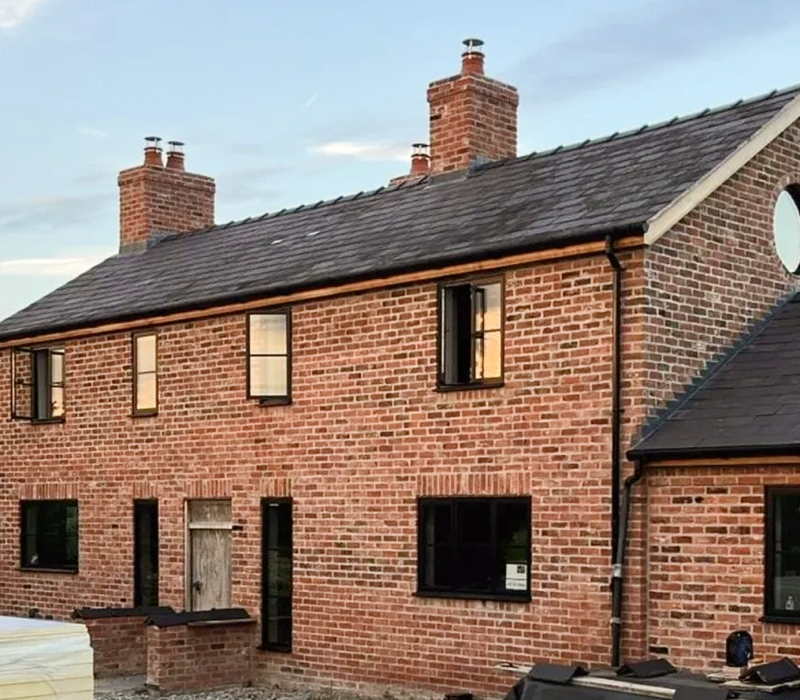
Client Type: Residential Period Property
Location: Near Tarporley, Cheshire
Specialism: Heritage Brickwork, Lime Mortar Repointing, Damp Remediation
Materials Used: NHL 3.5 Natural Hydraulic Lime, Locally Sourced Sharp Sand, Reclaimed Cheshire Bricks.
Techniques: Hand-raking, Bespoke Tonal Matching, Stippled Finish.
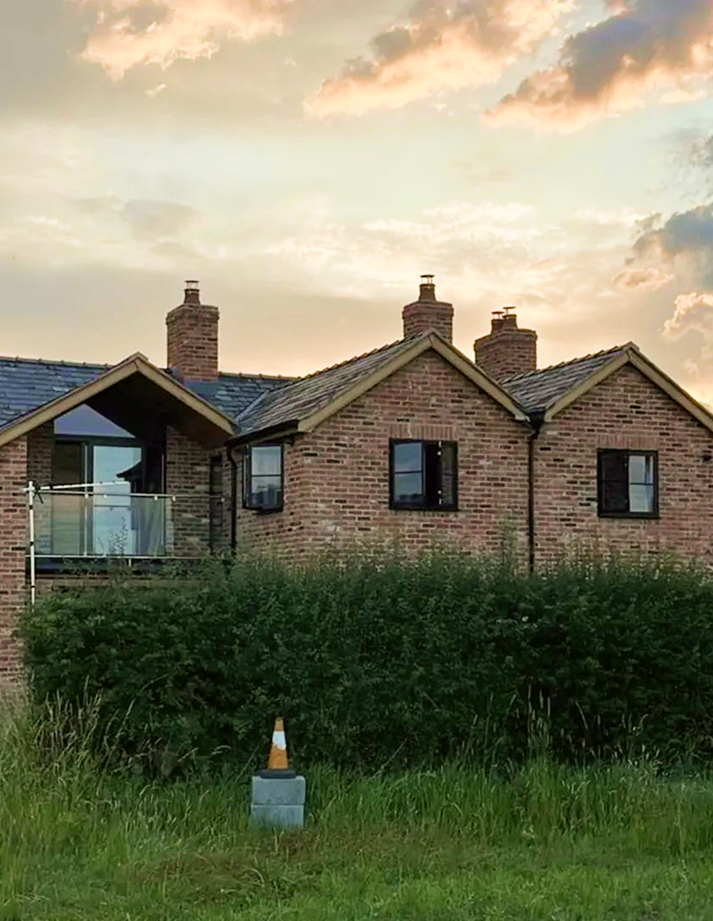
Nestled in the rolling landscape near Tarporley, this mid-19th-century farmhouse is a classic example of Cheshire’s agricultural architectural heritage. Constructed using local “Cheshire Commons” (bricks known for their distinct orange-red hue and relatively soft, porous composition), the building was designed to function in harmony with the environment.
For hundreds of years, the property stood firm, utilising traditional lime mortar to manage the high water table and frequent rainfall characteristic of the Cheshire plains.
When K. Blythin was first called to the site, the property was showing signs of significant distress. The homeowners reported persistent “musty” smells, peeling wallpaper, and visible damp patches on the internal gable walls.
Upon inspection, the culprit was immediately clear: a previous “maintenance” project from the late 20th century.
In an attempt to modernise the house, a local contractor had repointed the entire elevation using a high-strength Portland cement.
“We see this all too often across Cheshire,” says Keith Blythin, Managing Director of K. Blythin Brick & Stonework Ltd. “Well-intentioned builders use modern cement because it’s fast and hard. But on a period brick property, cement acts like a plastic wrap. It seals the joints, which sounds good in theory, but it actually traps moisture inside the brick itself. The water has nowhere to go but inward into the house, or it freezes inside the brick and blows the face off. And that’s exactly what was happening here.”
The hard cement had also caused “point-loading,” where the rigid mortar was stronger than the soft Cheshire brick. As the house naturally expanded and contracted with the seasons, the mortar didn’t budge. Instead, the bricks cracked under the pressure.
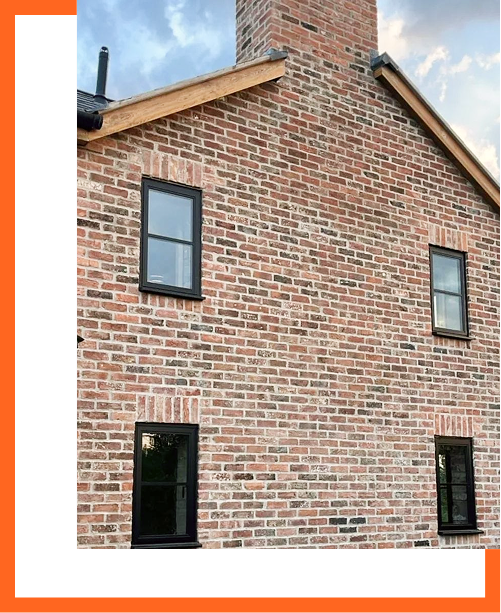
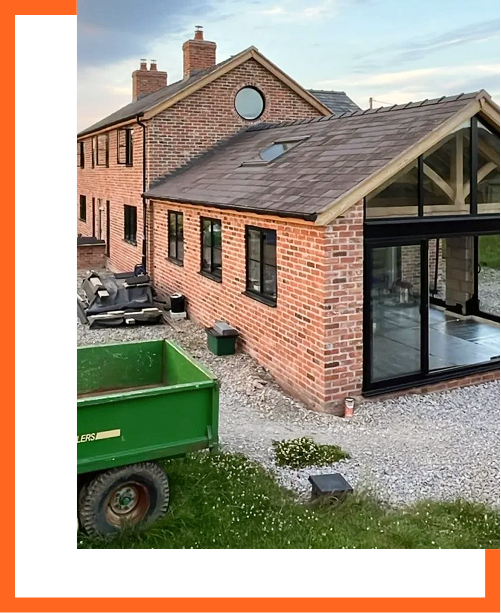
The first phase was the most delicate: removing the cement. Using mechanical grinders on soft heritage bricks is a recipe for disaster, as it inevitably “scars” the brick edges, widening the joints and ruining the building’s aesthetic. With that in mind, our team utilised hand-chisels and specialised oscillating tools to carefully rake out the cement to a depth of 25mm. This ensured a clean, square-cut recess for the new mortar to bond with.
No two lime mixes are the same. We analysed the original mortar found deep within the wall to determine the aggregate size and colour. For this project, we selected a Natural Hydraulic Lime (NHL 3.5). This grade provides the perfect balance as it is durable enough to withstand the wind-driven rain of the Cheshire countryside, yet flexible enough to allow the building to breathe.
The “Cheshire Orange” brick requires a specific tonal match. We avoided off-the-shelf pigments, instead using a blend of local sands to achieve a warm, honey-toned mortar that complemented the weathered brickwork. The mix was prepared “dry” to ensure maximum compaction during application. Thus, reducing the risk of shrinkage cracks.
The mortar was ironed into the joints in layers, ensuring no air pockets were left behind. As the mortar began its initial set, we “beat back” the surface with a stiff brush. This process, known as stippling, exposes the aggregate and creates a textured finish that looks original to the 1800s.
Crucially, because lime mortar cures through carbonation (absorbing CO2 from the air), we monitored the “cure” closely. In the days following application, the wall was kept damp to ensure the lime didn’t dry out too quickly, which is essential for a long-lasting, frost-resistant bond.
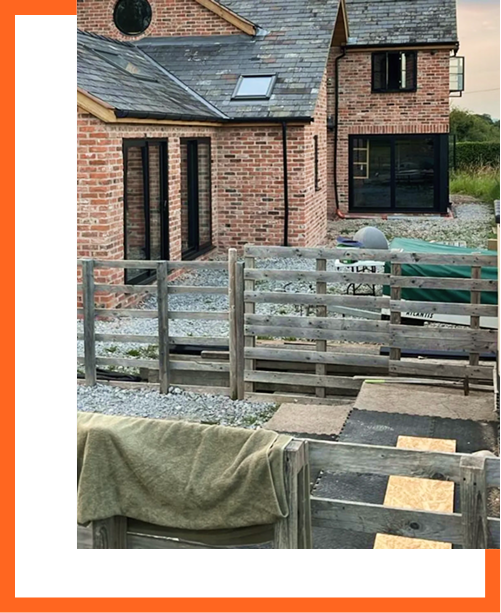
The transformation was both aesthetic and functional. Visually, the farmhouse regained its historic integrity. Here, the harsh, dark lines of the cement were replaced with soft, tonal joints that unified the masonry.
However, the real success was hidden within the walls. Within months of the project’s completion, the internal damp patches had vanished. By allowing the moisture to evaporate through the lime joints (this acted as a “wick”), the internal environment of the home became drier, warmer and healthier.
For the homeowners, the investment in specialist masonry saved them from the spiralling costs of internal damp-proofing injections, which would have only masked the problem. Keith mentions:
“This project represents exactly why we do what we do. It’s about more than just aesthetics. It’s about understanding the physics of these old buildings. Because when you use the right materials, the building actually helps maintain itself. We didn’t just fix a wall here. We ensured that the farmhouse would be standing for another century.”
If you’re noticing damp patches or crumbling brickwork, don’t settle for a “cement fix.” Call our experts today for a site visit and professional assessment.
We treat every Chester home as if it were our own, ensuring minimal disruption to you and your neighbours.