
Client Type: Heritage Property / Private Estate
Location: Chester City Centre (Heritage Zone)
Specialism: Sandstone Restoration, Lithomex Repair, Hot-Lime Mortar
Materials: Hot-Lime Mortar (Quicklime & Local Sand), Lithomex Stone Repair Mortar.
Techniques: Hand-Raking, Desalination, Stone Carving, Tonal Colour Matching.
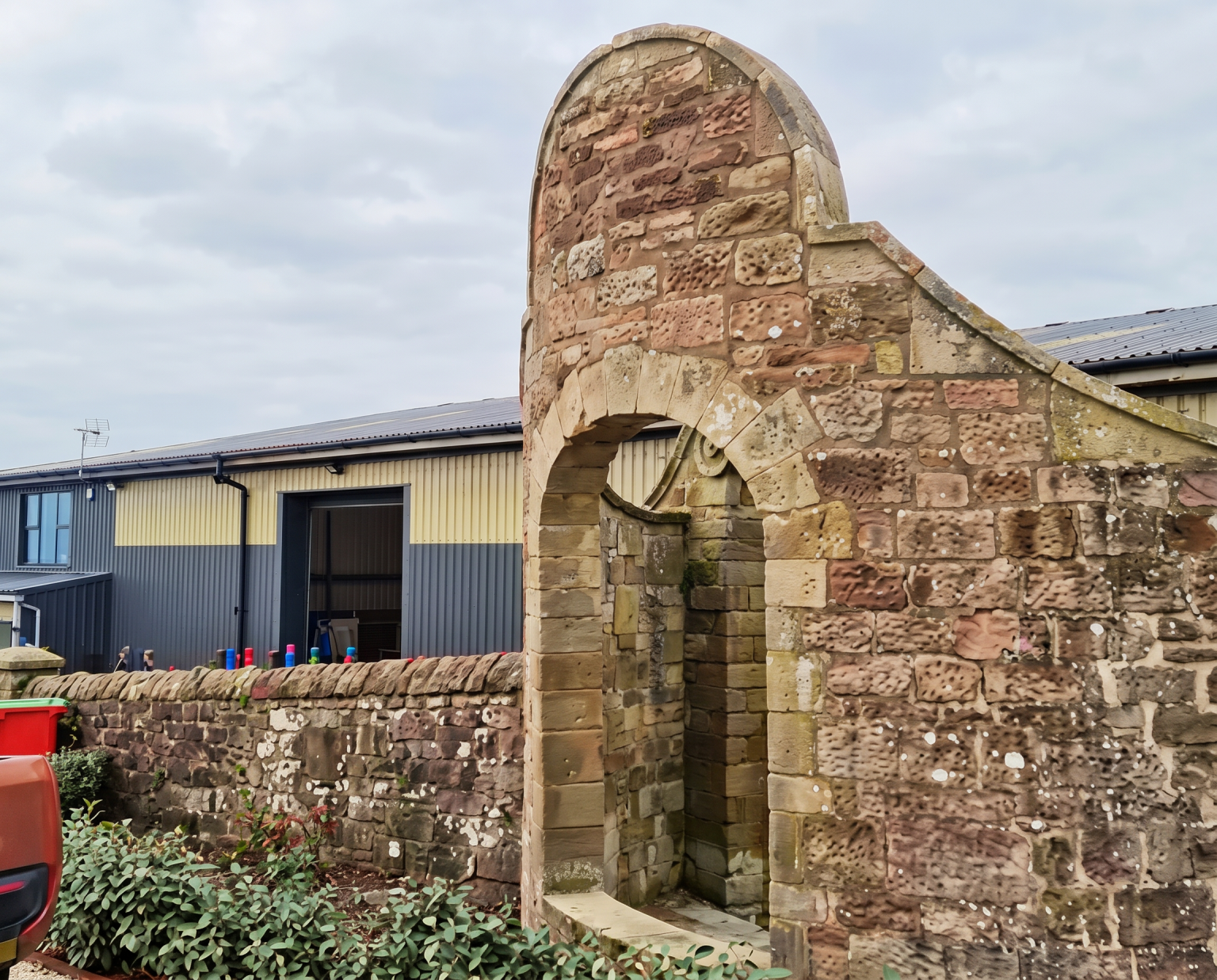
This project involved a significant ornamental archway located within a private estate in Chester’s historic core. Over the decades, the arch had been subjected to “patch-repairs” using hard, grey cement.
As cement is impermeable, it forced a process known as subflorescence.
Basically, moisture carrying dissolved minerals and salts would travel through the stone but hit the “wall” of the cement joint. Unable to escape, the salts would crystallise behind the stone’s surface.
The pressure from these growing crystals eventually caused the face of the sandstone to “delaminate” or “spall,” leaving the arch looking ragged and structurally compromised. As explained by our MD, Keith Blythin:
“Working with sandstone in Chester requires a massive amount of respect. You aren’t just repairing a wall. You’re managing the movement of water. So when you see that white powdering or the stone face peeling off like an orange skin, you know the stone needs air. To be honest, if we had left this arch another five years, the decorative details would have been lost forever.”
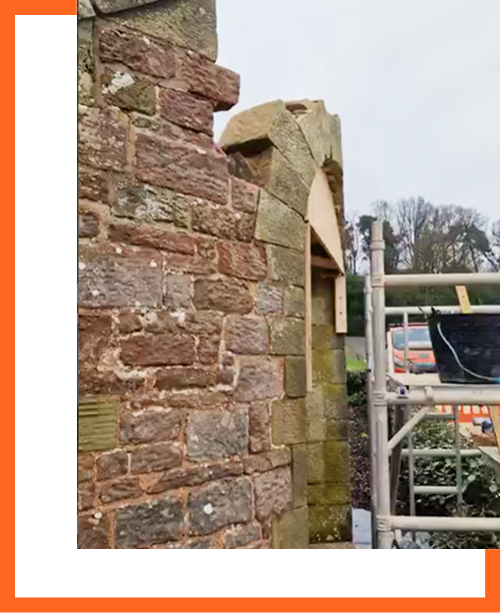
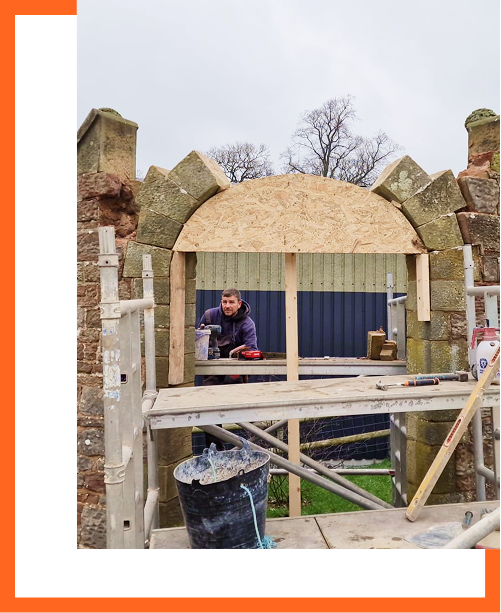
Before any mortar could be applied, we had to stabilise the stone. We began by removing the failing cement joints using specialised hand tools. We avoided any percussive machinery that could shatter the fragile sandstone edges. Soon, we then performed a gentle dry-brushing to remove loose salt deposits. In areas of high salt saturation, we applied localised “poultices” to draw the harmful minerals out of the stone’s pores before the restoration began.
For sandstone of this age and porosity, standard hydraulic lime isn’t always enough. For this archway, we utilised a traditional Hot-Lime Mix.
Hot lime (produced by slaking quicklime with sand and water on-site) creates a mortar with exceptionally high vapour permeability and a high “free lime” content. This makes it incredibly “sticky” and flexible, allowing it to bond deeply into the irregular crevices of weathered sandstone. This is the closest possible match to the mortars used by the original medieval and Victorian masons who built Chester up.
Where the arch had lost its physical shape, we couldn’t just use mortar. We utilised Lithomex, a lime-based stone repair mortar specifically engineered for heritage restoration.
Once the Lithomex had reached a “leather-hard” state, our masons used fine chisels and abrasive pads to hand-carve the repairs. We mimicked the original tool marks found on the surrounding stone, ensuring the light would catch the new surface in the exact same way as the old.

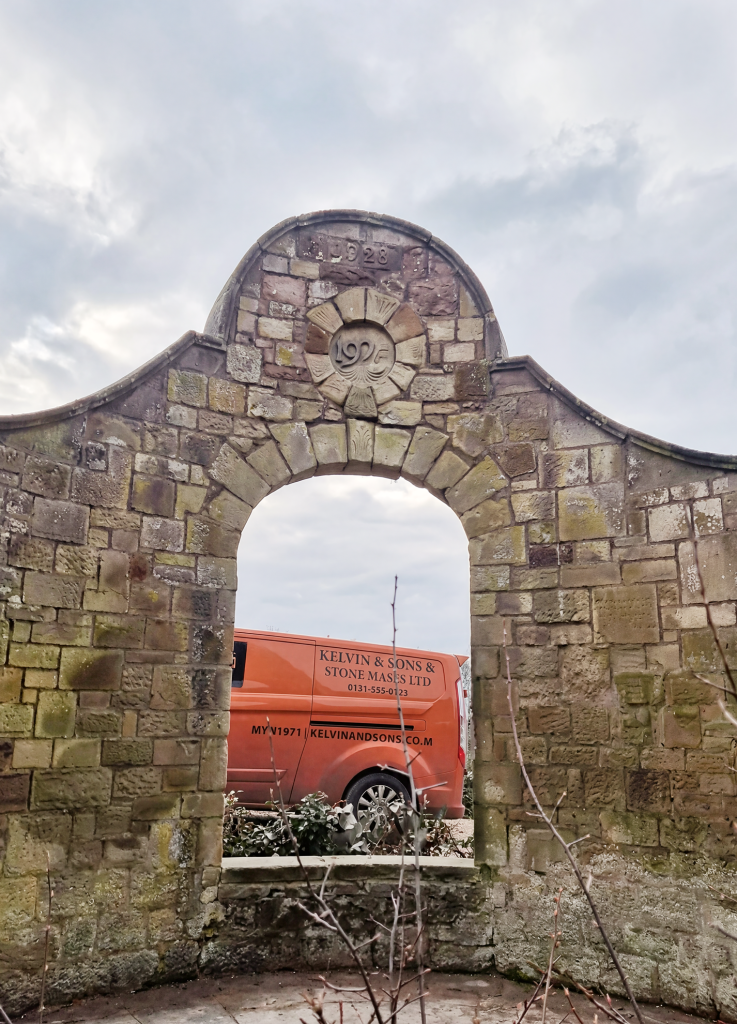
The finished archway now stands as a prime example of sympathetic restoration. The harsh, dark “grid” of cement lines has been replaced with soft, tonal joints that allow the beauty of the stone to take centre stage.
More importantly, the arch is now “breathing” again. Moisture is free to move through the hot-lime joints, and the salt-crystallisation process has been safely redirected to the surface of the mortar where it can be harmlessly brushed away during routine maintenance.
This project highlights the difference between a “quick fix” and true conservation. By investing in traditional materials, the client has halted the active decay of their property.
“There’s a real satisfaction in seeing the life come back into a piece of sandstone,” says Keith. “In Chester, we have a duty to keep these features going. Using hot lime and Lithomex isn’t the easiest way to do it, but it’s the only way if you want the repair to last. We’ve given this archway its breath back, and that’s what heritage masonry is all about.”
Chester’s red stone needs specialist care to prevent permanent loss of detail and the headache from local councils. So contact our experts today to discuss a conservation plan tailored to your heritage building.
We treat every Chester home as if it were our own, ensuring minimal disruption to you and your neighbours.